Review: Beat ’Em Up Collection (PlayStation 5)
Side-scrolling beat ’em ups were one of my favourite genres growing up. The Streets of Rage series, Double Dragon, Renegade, Final Fight, Batman Returns, Teenage Mutant Ninja Turtles, and The Simpsons Arcade are games I loved playing when I was younger.
While side-scrolling beat ‘em ups have never completely disappeared, they’ve enjoyed a resurgence in recent years. Games such as Streets of Rage 4, Teenage Mutant Ninja Turtles: Shredder’s Revenge, Marvel Cosmic Invasion, and the forthcoming He-Man and the Masters of the Universe: Dragon Pearl of Destruction show that the genre is as popular as ever.
Because of that, I’m always keen to try new beat ’em ups, so I was looking forward to playing Beat ’Em Up Collection as there are several games I’d never played before.
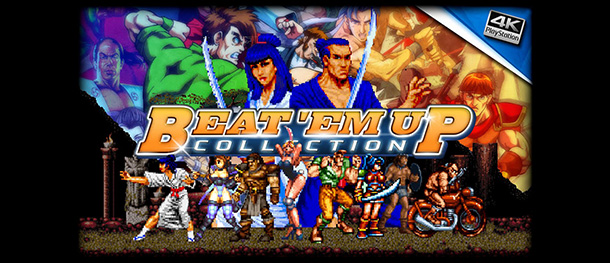
The collection features seven games from the 1990s. As is usually the case when reviewing compilations like this, I’ll look at each game individually before giving my overall thoughts.
First Samurai
I remember playing First Samurai on the Amiga when it was originally released, and I generally had fond memories of it. I wouldn’t really class it as a traditional side-scrolling beat ‘em up. Instead, it’s more of an action-adventure game where you explore, collect items, and battle a wide variety of enemies.
One thing I always remembered was the inventive use of sound effects. For example, collecting certain items triggers a chorus of “Hallelujah,” which always made me smile.
First Samurai is still enjoyable today. Kicking, punching and swinging your sword all feel satisfying. The jumping is a little floaty, which becomes frustrating during the platforming sections, and the screen can become quite cluttered, making it difficult to judge exactly where you need to go. Despite those issues, it’s still a fun game that brought back plenty of childhood memories.
Score: 3/5
Second Samurai
I’d never played Second Samurai before, but because I enjoyed the first game, I expected this to be just as good.
Where the original encouraged exploration, Second Samurai is much closer to a traditional side-scrolling beat ’em up. You can even bring a friend along for co-op, and honestly, that almost feels essential because the game is incredibly difficult.
The first thing that stood out was the graphics. Everything is colourful and detailed, the character animation is excellent, and for its time this would have been a very impressive-looking game.
Unfortunately, the controls let it down. Punches and kicks feel rather stiff and never become as satisfying as I’d hoped. The biggest issue, though, is the relentless difficulty. Enemies constantly swarm you and they just keep coming no matter how many you defeat.
As a result, I switched it off fairly quickly, which is a shame because there’s clearly a good game buried underneath the frustration.
Score: 1.5/5
Gourmet Warriors
I thought I’d seen everything the genre had to offer, and then along came Gourmet Warriors.
The game feels a little like Streets of Rage, allowing you to choose between three characters—Bonjour, Mademoiselle and Très Bien, each with their own fighting style. The unusual twist is that everything revolves around food.
The gameplay is fairly standard. You can punch, kick, jump and grab enemies, while there’s also a bizarre “pose” move where your character flexes their muscles without seemingly doing anything useful.
The enemies are wonderfully strange, including giant floating heads controlled by tiny people. Once you destroy the head, you can stomp on the little people underneath.
Throughout each level you collect food ingredients, which are later cooked by a chef to restore health or provide other bonuses.
It’s a decent beat ‘em up. The graphics are fine, the gameplay is solid enough, although the music is forgettable. The food theme is certainly what makes it memorable, and it’s worth trying because it’s so different.
Score: 2.5/5
Iron Commando
In many ways, Iron Commando looks like Capcom’s arcade classic The Punisher. It has a gritty visual style, and you can use pistols, shotguns and machine guns against enemies.
Unfortunately, that’s where the similarities end.
The combat feels surprisingly limited. There’s no run or dash mechanic, while your special attack just throws grenades that explode across the screen.
The biggest problem is how much punishment even basic enemies can absorb. A shotgun only holds three shells, yet it often takes every shot just to defeat a standard enemy. Combat quickly becomes repetitive and tedious.
Another annoyance is the jumping, which feels like you’re on the moon thanks to its excessive height.
It’s a missed opportunity. Despite looking promising, it simply isn’t much fun to play. It’s also brutally difficult—I couldn’t even finish the first level on the easiest setting.
Score: 1.5/5
Legend
Legend was another game I’d never played before, but I ended up enjoying it far more than I expected.
It reminded me of Capcom’s Dungeons & Dragons: Tower of Doom and Dungeons & Dragons: Shadow over Mystara mixed with a little Golden Axe. That’s a very high standard to compare against, and while Legend never quite reaches those heights, it’s still a respectable fantasy brawler.
The sword-and-sorcery setting works well, the graphics are attractive (with a little Mode 7 effect thrown in for good measure), and there’s a decent variety to the action.
The controls are fine, although movement feels a little slow and your character never feels particularly agile. Like several other games in the collection, the difficulty is quite unforgiving, and it would almost certainly be more enjoyable with a second player.
Overall, though, it’s a pleasant surprise.
Score: 3/5
Water Margin: A Tale of Clouds and Wind
Other than Gourmet Warriors, Water Margin: A Tale of Clouds and Wind wins the award for the most elaborate title in the collection.
You can choose between three different characters, each with their own strengths and weaknesses in attack, defence, agility and jumping ability.
I’ll admit I wasn’t expecting much, largely because I’d never heard of it, but I was pleasantly surprised. In fact, I found it to be my favourite game in the collection.
The setting is enjoyable, the controls are responsive, combat feels satisfying, and there’s a good variety of enemies to fight. While it doesn’t quite reach the heights of classics like Final Fight or Golden Axe, for me, it is the standout title here.
Score: 4/5
Sword of Sodan
I had high hopes for Sword of Sodan. Anything with a sword-and-sorcery setting immediately reminds me of Golden Axe, one of my favourite games of all time.
Sadly, my excitement disappeared almost immediately.
You can choose between a muscle-bound warrior and a female fighter who reminded me of Maria Whittaker from Barbarian. The graphics are decent enough, with large, detailed sprites, but that’s about where the positives end.
The controls are dreadful! Your character moves at the pace of an arthritic sloth! Turning around takes an eternity, and endless enemies attack from both directions, meaning you’re constantly taking unavoidable damage.
The potion system is equally baffling. Instead of simply pressing a button, you have to pause the game, select the potion, unpause the game, and then press Square to drink it.
It’s the icing on an already unpleasant cake, and as you can probably tell, I wasn’t a fan.
Score: 1/5
Summary
As with many retro compilations, Beat ’Em Up Collection is a real mixed bag. There are a handful of enjoyable games alongside some absolute stinkers.
These collections are generally aimed at hardcore retro enthusiasts who either played these titles back in the day or simply want to experience every side-scrolling beat ’em up ever released.
As someone who loves the genre, I appreciated the chance to revisit some forgotten classics and discover a few games I’d never played before. However, it’s also a reminder that not every game deserves to be remembered.
If you’re a dedicated beat ‘em up fan, there’s enough here to justify a look. Just be prepared to sift through some very rough games to find the gems.
Overall Score: 2.5/5
Review by Chris.